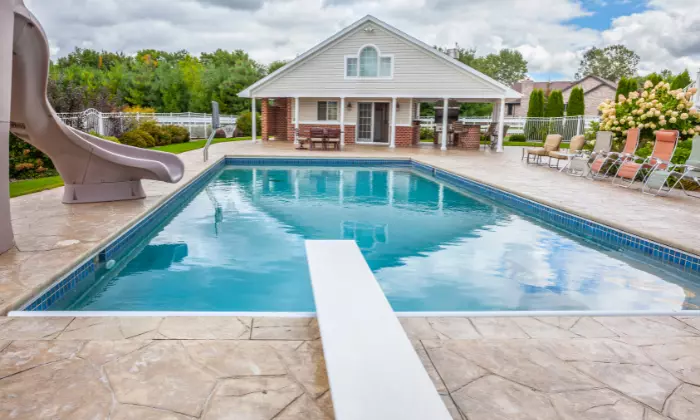
However, if you are looking at a sun-baked cracked concrete deck and asking yourself, “Isn’t there a better way?” you are not alone. Most pool owners hit this wall after a few summers of slippery tiles, fading color or surfaces too hot to walk on barefoot. We get it and we’ve spent years helping homes solve this exact problem.
Here’s our promise: at the conclusion of this post, you’ll know exactly what a travertine pool deck accomplishes well, where it falls short, and whether it’s the right fit for your backyard and budget. We’ll talk about the material itself, how it compares to concrete and pavers, what maintenance really means, and the true numbers behind installation. A travertine pool deck that enhances your outside environment is not just a marketing slogan. It’s a certain range of trade-offs that are worth knowing before you sign a contract.
What Is a Travertine Pool Deck?
A travertine pool deck is a surface made from natural limestone tiles or pavers, formed near mineral hot springs over thousands of years. It’s installed around pools because it stays cool underfoot, resists slipping when wet, and holds up to sun and chlorine exposure better than most alternatives.
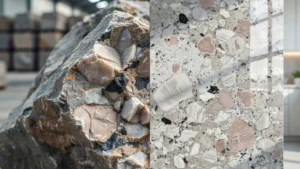
The stone forms when hot spring water deposits calcium carbonate layer by layer. That process creates the pitted, textured surface travertine is known for. Manufacturers either fill those pits with a resin-based filler for a smoother finish or leave them open for a rougher, more rustic look.
Most pool decks use travertine pavers rather than large slabs. Pavers handle temperature swings and ground movement better because they flex slightly at the joints instead of cracking as one solid piece. That’s a real advantage in regions with hot summers and cold winters.
Understanding Travertine: A Timeless Natural Stone
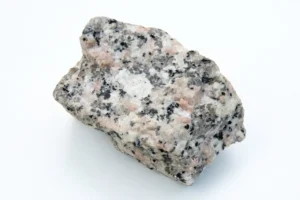
Travertine is related to limestone and marble, although it is created differently. Instead, it is deposited above the earth surface near geothermal springs rather of forming below under pressure, giving it that layered, banded look people call stone patina or natural veining.
Its colour is due to the mineral makeup of the water in which the stone was produced. Iron offers warm tones, like walnut and gold. Lighter ivory and beige hues are the most common surrounding pools and result from lower quantities of minerals. No two tiles are same, and that’s part of the allure to homeowners who want a backyard paradise that doesn’t look mass-produced.
Travertine is available in four basic finishes: tumbled, honed, brushed and polished. Tumbled provides the roughest texture and best grip, making it the perfect choice for pool decking. Polished is lovely but dangerous when wet and slick so poolside never used! Honed and brushed fall somewhere in between, giving a good blend of smoothness and slip-resistance.
The Advantages of Travertine Pool Decks
Does Travertine Stay Cool in the Sun?
Yes, travertine stays noticeably cooler than concrete or dark pavers because it reflects heat instead of absorbing it. Its light color and porous surface prevent the buildup that makes materials like asphalt or dark tile uncomfortable to walk on during peak summer hours.
This heat reflectivity matters more than most people expect until they’ve burned their feet on a different surface. Dark, dense materials absorb solar energy and hold onto it long after the sun moves. Travertine’s cool-touch texture comes from its natural porosity, which lets heat dissipate rather than build up at the surface.
That same porosity handles water drainage well. Rain and pool splash-out soak into the stone’s surface pores instead of pooling on top, which cuts down on standing water and the algae growth that comes with it.
Slip Resistance Around Water
Wet pool decks cause a real number of injuries every year, and surface texture is the main factor. Tumbled and honed travertine finishes create a non-slip pool surface without needing an artificial grip coating. The natural texture does the work.
This matters most for households with kids, seniors, or anyone managing mobility issues. A slip-resistant surface isn’t a luxury feature here. It’s a safety decision that pays off the first time someone runs to grab a pool float and doesn’t go down.
Durability and Weather Resistance
Natural stone durability is travertine’s strongest selling point. It resists cracking, chipping, and fading better than poured concrete, and it doesn’t develop the surface pitting that stamped concrete shows after a few seasons of sun exposure.
Cold climates are where things get more complicated. Travertine has decent freeze-thaw resistance when it’s properly sealed, but water that penetrates an unsealed surface and freezes can cause cracking over time. Homeowners in northern states should ask their installer about freeze-thaw rated sealants specifically, not just general stone sealers.
Travertine vs. Other Pool Deck Materials
How Does Travertine Compare to Concrete?
Travertine outperforms plain concrete on heat retention, slip resistance, and appearance, but concrete costs less upfront. Concrete works fine on a tight budget, though it cracks more easily and needs resealing or resurfacing sooner than a properly maintained travertine deck.
Poured concrete is the cheapest option on the market, and stamped concrete tries to mimic the look of natural stone at a lower price point. The problem is that stamped patterns wear down, and the surface can get slick once the texture flattens out. Plain concrete also absorbs heat aggressively, which makes it uncomfortable during the hottest part of the day.
Travertine costs more per square foot, but the gap narrows once you factor in resealing schedules for both materials and the shorter lifespan of decorative concrete finishes.
| Material | Heat Retention | Slip Resistance | Upfront Cost | Lifespan |
| Travertine pavers | Low (cool-touch) | High | Higher | 25+ years with care |
| Stamped concrete | High | Moderate, drops as texture wears | Lower | 10-15 years |
| Plain concrete | High | Low when wet | Lowest | 15-20 years |
| Flagstone | Moderate | High | Moderate to high | 20+ years |
| Porcelain pavers | Low | Moderate to high | Moderate | 20-25 years |
Flagstone and porcelain pavers are the closest competitors to travertine. Flagstone offers similar natural variation but comes in fewer color options depending on your region. Porcelain pavers cost less than travertine, resist etching completely, and never need sealing, but they lack the same organic texture and warmth underfoot.
Where Travertine Falls Short
No material is perfect, and travertine has real weaknesses worth knowing about before you commit.
Etching is the biggest one. Travertine is calcium-based, which means acidic substances like citrus, wine, and some pool chemicals can etch the surface and leave dull spots. Pool owners using certain chlorine tablets or algaecides should check the pH balance regularly and clean up spills fast.
Cost is the second issue. Travertine runs higher than concrete and often higher than porcelain pavers too. Homeowners on a strict budget may need to phase the project or choose a smaller deck footprint to make it work.
Color variation that gives travertine its character can also frustrate homeowners who want a uniform look. Ordering extra material from the same lot and having an experienced installer lay it out in advance helps avoid mismatched patches.
Maintenance & Care Guide
How Do You Maintain a Travertine Pool Deck?
Travertine pool deck maintenance involves regular sweeping, occasional rinsing with a pH-neutral cleaner, and resealing every two to three years. This routine prevents staining, protects against water penetration, and keeps the surface looking close to its original color.
Sweep debris off the deck weekly if it sits under trees or near landscaping. Dirt and organic matter left sitting on porous stone can stain over time, especially in shaded, damp spots.
For deeper cleaning, mix a pH-neutral cleaner or a diluted mild soap with water. Avoid bleach, vinegar, or anything acidic since those will etch the surface. A soft-bristle brush handles most grime without scratching the stone.
Sealing travertine protects it from water absorption, staining, and mineral buildup from pool splash-out. Most sealants last two to three years depending on foot traffic and sun exposure, though high-use pool areas may need resealing sooner. Skipping this step is the single most common reason travertine decks look worn out ahead of schedule.
Small chips and cracks happen eventually, and they’re easy to fix. A stone filler matched to your travertine’s color handles minor damage without a full tile replacement. For anything larger, replacing the individual paver is usually cheaper than most homeowners assume.
What Does a Travertine Pool Deck Cost?
Travertine pool deck installation typically runs between $15 and $30 per square foot including materials and labor, depending on region, finish, and paver thickness. Total project cost usually lands between $4,500 and $12,000 for an average residential pool deck.
Labor makes up a large share of that price because proper installation requires a compacted base, correct joint spacing, and careful leveling. Cutting corners here leads to shifting pavers and drainage problems within a few years, so it’s worth paying for an experienced crew.
Sourcing travertine from a supplier who buys in bulk, rather than a retail showroom, can lower material costs meaningfully. Ask contractors about their supplier relationships. Many have standing accounts that get better pricing than what’s listed online.
Resale value is where the investment often pays off. Real estate agents commonly note that natural stone hardscaping ranks among the upgrades buyers notice first when touring a home with a pool.
Is a Travertine Pool Deck Right for Your Home?
Travertine makes the most sense for homeowners in warm to moderate climates who want a natural, cool-touch surface and are willing to handle periodic sealing. It’s a strong match for anyone prioritizing safety around water, since the slip resistance is hard to beat without an artificial coating.
It’s a tougher sell for homeowners in extreme freeze-thaw regions who don’t want to commit to specialized sealants, or for anyone who wants a completely maintenance-free surface. If that’s you, porcelain pavers might serve you better.
Budget matters too. If you’re set on stone appearance but need to stay under a tight number, ask about mixing travertine as a border or feature area with a lower-cost material filling the rest of the deck. It’s a common compromise that keeps the aesthetic without the full price tag.
Final Thoughts
A travertine pool deck enhancing your outdoor space comes down to a simple trade: a higher upfront cost and a bit of ongoing care in exchange for a cooler, safer, longer-lasting surface than most alternatives offer. It’s not the right fit for every budget or every climate, but for homeowners who want their backyard to feel like an actual retreat instead of a hot slab of concrete, it’s hard to beat.
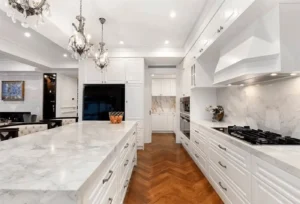
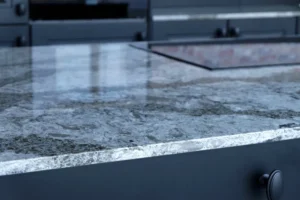
If you’re already thinking about upgrading other parts of your home with natural stone, the same qualities that make travertine work outdoors, durability, natural variation, and heat resistance, are exactly why homeowners choose stone indoors too. If you’ve been considering a Granite Countertop Installation in Lowell, the material logic is the same: natural stone holds up, ages well, and adds real value to a home.
At SF Marble and Granite, we work with both pool decking and interior stone projects, so you’re not stuck piecing together quotes from five different companies. Contact us for a straightforward estimate and a look at material options that fit your budget and your climate.
FAQs
Does travertine get slippery when wet?
Tumbled and honed travertine finishes stay grippy even when wet, which is why they’re the standard choice for pool decks. Polished travertine is the exception and should be avoided in pool areas.
How long does a travertine pool deck last?
With regular sealing and basic care, a travertine pool deck can last 25 years or longer. Neglecting sealant and cleaning cuts that lifespan down considerably.
Can travertine be used in cold climates?
Yes, but it needs a freeze-thaw rated sealant and proper installation with adequate drainage underneath the pavers. Without that, water trapped in the stone can freeze and cause cracking.
Is travertine more expensive than pavers?
Travertine generally costs more than concrete pavers but is comparable to or slightly higher than premium porcelain pavers, depending on the finish and thickness selected.