You’ve probably compared ten materials already and you’re tired of contractors pushing whatever slab happens to be on sale that week. Picking a countertop feels harder than picking a car. You want something tough, good looking, and worth the money, not a surface you’ll regret in five years.
Here’s the short answer: quartzite is one of the hardest natural stones you can put in a kitchen, and it holds up to heat, scratches, and daily abuse better than almost anything else on the market. That’s exactly why quartzite countertops are the best option for your kitchen if you want a surface that looks like marble but performs more like granite. Over the next few minutes, I’ll walk you through what quartzite actually is, how it stacks up against quartz and granite, what it costs, and the mistakes people make once it’s installed.
What Exactly Is Quartzite?
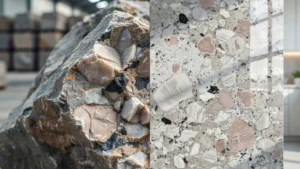
Quartzite is a natural stone formed when sandstone gets compressed and heated deep underground until the quartz grains fuse together. This process makes it one of the hardest countertop materials available, sitting close to 7 on the Mohs hardness scale. It’s mined in large blocks, then cut into slabs and polished for kitchen use.
That last part matters because quartzite and quartz get mixed up constantly, and they’re not the same thing. Quartz countertops are engineered, made from crushed stone mixed with resin in a factory. Quartzite is 100% natural stone, pulled straight from the ground. Every slab has its own veining and color pattern, so no two kitchens end up looking identical.
The formation process is also why quartzite starts out as sandstone. Heat and pressure from the earth’s crust recrystallize the sand grains over thousands of years, locking them into a dense, tightly packed structure. That density is what gives the stone its strength, and it’s also why quarrying and cutting quartzite takes more time and specialized equipment than softer stones like marble or limestone. Fabricators often need diamond-tipped blades just to get through a slab cleanly.
Color and pattern depend heavily on the minerals present during formation. Iron gives some slabs a warm gold or rust tone, while others stay closer to white or gray depending on the original sand deposit. This is part of why buyers researching natural stone countertops often end up picking quartzite once they see a few slabs in person, since photos rarely capture the depth of the veining accurately.
Quartzite vs Granite vs Quartz vs Marble: How It Actually Compares
Most homeowners aren’t choosing quartzite in isolation. They’re standing in a showroom comparing four slabs at once, so here’s the side-by-side version.
| Material | Hardness (Mohs) | Heat Resistance | Maintenance | Typical Look |
| Quartzite | ~7 | Excellent | Periodic sealing | Marble-like veining |
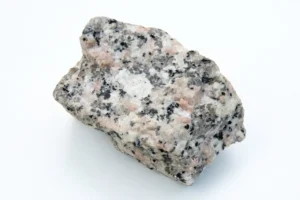
| Granite | ~6–6.5 | Very good | Periodic sealing | Speckled or grainy |
| Quartz (engineered) | ~7 | Good, but can discolor under high heat | Low, no sealing | Uniform pattern |
| Marble | ~3–4 | Fair | Frequent sealing | Soft veining |
Granite is the closest natural competitor in terms of durable kitchen surfaces, but quartzite generally wins on hardness and scratch resistance. Engineered quartz skips the sealing step, which some people prefer, but it can’t take direct heat the way natural stone can. Marble looks beautiful and is the softest of the group, which is exactly why it scratches and etches so easily.
Durability and Heat Resistance: The Numbers That Matter
A countertop’s hardness rating isn’t just a number on a spec sheet. It translates directly into how your kitchen holds up when life happens.
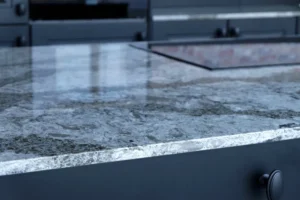
Set a hot pan straight from the stove onto quartzite and it won’t scorch or discolor the way laminate or engineered quartz sometimes does. That’s a real advantage if you cook often and don’t want to fumble for a trivet every single time. I still recommend using one for very high heat, mostly to protect the sealant layer, not the stone itself.
Engineered quartz, despite the similar name, contains resin binders that can soften or discolor under sustained high heat, like a hot pot left sitting for several minutes. Quartzite doesn’t have that resin, so the risk is much lower. This single difference is one of the more overlooked reasons quartzite kitchen countertops keep showing up in professional kitchens and homes with heavy daily cooking, not just in showroom displays built for looks.
Data suggestion: If you have access to manufacturer heat-resistance test data (some quartzite suppliers publish this), a short comparison chart showing scorch temperatures for quartzite, granite, and quartz would add real weight here.
Scratch Resistance and Everyday Kitchen Use
Kids drop utensils. Knives slip. Cast iron pans get dragged across the surface more often than anyone plans for. This is where heat resistant countertops matter less than scratch resistant countertops, because scratches happen daily and burns happen occasionally.
Quartzite handles both well. Its hardness means a dropped knife or a dragged pan is far less likely to leave a mark compared to marble or soft granite. That said, no stone is scratch-proof. Cutting directly on any natural stone surface will eventually dull your knives and can leave fine marks over time, so a cutting board is still worth keeping around.
The Truth About Porous Surfaces and Sealing
Here’s something a lot of sales reps gloss over: quartzite, like most natural stone, is a porous surface. That means it has tiny openings that can absorb liquid if it’s not sealed properly.
Unsealed or poorly sealed quartzite can stain from wine, oil, or coffee left sitting too long. It’s also vulnerable to etching, which is the dulling or discoloration that happens when acidic foods like lemon juice or vinegar sit on the surface. Etching isn’t the same as staining. It’s a change in the finish itself, and it can’t always be polished out.
The good news is that quartzite resists etching far better than marble because it’s harder and less reactive to acid. A properly sealed slab is genuinely one of the more durable kitchen surfaces you can buy, but “properly sealed” is doing a lot of work in that sentence.
Care and Maintenance: What Sealing Actually Involves
Sealing isn’t complicated, but skipping it is the single biggest reason quartzite gets a bad reputation online. Most fabricators seal the slab once during installation, and then recommend resealing every one to two years depending on how much the counter gets used.
A simple water test tells you when it’s time. Splash a few drops on the surface. If the water beads up, the seal is still doing its job. If it soaks in and darkens the stone within a few minutes, it’s time to reseal. Cleaning day to day is straightforward: warm water, a mild dish soap, and a soft cloth. Skip bleach, ammonia, and abrasive scrubbers, since they can wear down the sealant faster than normal use.
Cost of Quartzite Countertops: Is It Worth the Price?
Quartzite typically costs between $70 and $200 per square foot installed, depending on the slab’s rarity, thickness, and where you’re sourcing it. It sits above standard granite but often below high-end marble or exotic quartz patterns. For most kitchens, that puts it firmly in the premium countertop material category without reaching luxury-only pricing.
The price swing is wide because quartzite isn’t manufactured to a consistent standard. Rarer veining patterns and larger slabs cost more, plain and simple. If you’re planning a full kitchen remodeling project, it’s worth getting quotes on a few different quartzite slabs before assuming the price tag is fixed. This is another reason why quartzite countertops are the best option for your kitchen if you want something that feels custom rather than mass produced, since pricing reflects the individuality of each slab.
Aesthetic Appeal: Veining, Color, and a Luxury Look
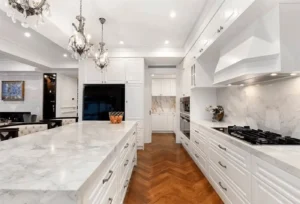
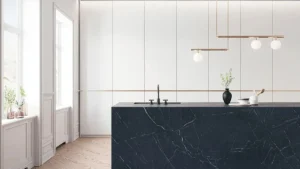
This is usually where quartzite wins people over even before the durability conversation starts. The veining runs through the stone naturally, so it moves and shifts across the slab the way marble does, but without the same fragility.
Colors range from soft whites and grays to deeper golds, blues, and greens depending on where the stone was quarried. If you’re going for luxury kitchen countertops without the maintenance headaches of true marble, quartzite splits the difference well. It photographs beautifully too, which matters if resale value or a future listing is anywhere in your plans.
Common Mistakes Homeowners Make With Quartzite
A few patterns show up again and again once people move past the showroom and into daily life with their new counters.
- Skipping the reseal schedule because “it looks fine,” then noticing a stain months later.
- Buying a slab labeled “quartzite” that’s actually dyed granite or a soft, marble-adjacent stone mislabeled by a supplier.
- Cutting directly on the surface for years and wondering why fine scratch lines built up.
- Hiring an installer who’s never fabricated natural stone before, which increases the risk of uneven seams or improper sealing.
Ask your supplier for a hardness test or a reputable lab report if you’re unsure whether a slab is true quartzite. It’s a fair question, and any honest fabricator will expect it.
Is Quartzite Right for Your Kitchen?
Quartzite fits kitchens where the owner wants a natural stone countertops with a high-end look and doesn’t mind a light maintenance routine. It’s a strong match for heavy cooking households, resale-focused renovations, and anyone who loves the marble aesthetic but wants better scratch and heat resistance.
If you rarely cook, mostly reheat takeout, and want zero maintenance, engineered quartz might suit you better. But if you’re set on natural stone and want something that can take a real beating in a working kitchen, quartzite earns its reputation honestly.
How Quartzite Fits Into a Full Kitchen Remodel
Countertops rarely get chosen in a vacuum. If you’re mid-way through kitchen remodeling, quartzite needs to work with your cabinets, your budget for the rest of the project, and your timeline, not just look good on its own.
Lighter quartzite slabs tend to pair well with darker cabinetry, since the contrast lets the veining stand out instead of blending into a busy background. Darker quartzite, on the other hand, works nicely against white or light wood cabinets for a more even, balanced look. Talk to your fabricator early about slab availability too, since rare colors sometimes take longer to source than standard granite, which can affect your renovation schedule if you’re working against a deadline.
Budget-wise, it helps to lock in your countertop choice before finalizing cabinet costs. Quartzite pricing swings widely based on the slab, so knowing your countertop budget first prevents overspending elsewhere and then having to downgrade the centerpiece of the kitchen.
Final Thoughts
Quartzite isn’t the cheapest option, and it isn’t completely maintenance-free, but for a working kitchen that needs to look sharp and survive daily use, it holds up better than most alternatives on the market. That combination of natural beauty and real toughness is why quartzite countertops are the best option for your kitchen if you’re renovating with the long term in mind rather than just the next few years.
If you’re in the Lowell area and weighing quartzite against other natural stone options, our team at SF Marble and Granite can walk you through actual slabs in person rather than tiny samples. We also handle Granite Countertop Installation in Lowell for homeowners who decide granite fits their budget or style better after seeing both side by side. Contact us to set up a showroom visit and get a real quote for your kitchen.
FAQs
Is quartzite better than granite for kitchen countertops?
Quartzite is generally harder and more scratch resistant than most granite, though both are strong natural stone options. Granite tends to cost less and comes in a wider range of price points, while quartzite often gives a closer visual match to marble for buyers chasing that specific look.
How much does quartzite countertop installation cost?
Installed quartzite typically runs between $70 and $200 per square foot, depending on slab rarity and region. Thicker slabs, rare veining patterns, and complex kitchen layouts push costs toward the higher end of that range.
Does quartzite need to be sealed?
Yes, quartzite needs sealing because it’s a porous surface that can absorb liquids and stain without protection. Most homeowners reseal every one to two years, checking with a simple water bead test to know when it’s due.
Can you cut directly on quartzite?
Cutting directly on quartzite isn’t recommended, even though the stone is hard. It can dull knives faster and may leave fine scratch marks on the surface over years of repeated use.
Is quartzite the same as quartz?
No, quartzite and quartz are different materials despite the similar name. Quartzite is a natural stone formed underground, while quartz countertops are engineered from crushed stone and resin in a factory setting.
How long do quartzite countertops last?
Properly sealed and maintained quartzite countertops can last 20 years or more without needing replacement. Its lifespan depends mostly on how consistently the sealing schedule gets followed and how the surface is treated day to day in the kitchen.