Why Quartzite Countertops Are the Best Option for Your Kitchen?
If you’re picking out a countertop, you want it to look good and actually be durable. That is a good thing to want. Most homeowners end up on the same short list: granite, quartz, marble, or quartzite, then get stuck comparing prices, hardness, and maintenance without a clear winner.
That’s the promise: When you’re done with this article, you’ll know what quartzite is, how it stacks up against quartz and granite, what it costs, and whether it’s the right choice for your kitchen. We’ll review the benefits, the trade-offs, the actual maintenance routine, and how to identify real quartzite versus mislabeled stone. If you’re pressed for time, the short answer is: quartzite is a natural stone that is harder than granite, more heat resistant and scratch resistant than most engineered surfaces, and has unique veining that never repeats slab to slab. If both durability and natural beauty are important to you, quartzite countertops are the best choice for your kitchen. That’s exactly why.
What Are Quartzite Countertops?
Quartzite countertops are slabs cut from a natural stone formed when sandstone gets compressed under intense heat and pressure deep in the earth. That process fuses quartz grains into a dense, hard material. Unlike engineered quartz, quartzite has no resin or added pigment. Every slab is 100% natural stone, which means no two ever look exactly alike.
Think of quartzite as sandstone that went through a pressure cooker for a few million years. The result is a stone with a Mohs hardness rating close to 7, putting it near the top of the natural stone hardness scale. That hardness is why quartzite kitchen countertops hold up to knives, pans, and daily traffic better than softer stones like marble.
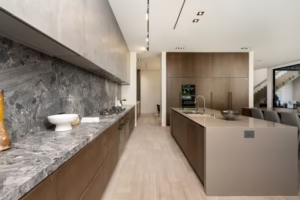
The veining in quartzite comes from mineral deposits trapped during formation. Some slabs show soft gray waves. Others show bold blue or green streaks that look closer to marble than granite. (Data opportunity: this is a good spot for a sourced statistic from the Natural Stone Institute or a geology reference on Mohs hardness comparisons across granite, marble, and quartzite, since exact hardness numbers add real credibility here.)
The Benefits of Quartzite Countertops
Quartzite earns its spot on kitchen remodeling shortlists for a few concrete reasons. Let’s go through them one at a time.
Exceptional Durability and Hardness
Quartzite is one of the hardest countertop materials of natural stone you can purchase. It is more resistant to scratches, chips and cracks than marble and is similar to granite . That kind of durability is more important than it might seem at first for a kitchen that gets chopped in every day, dropped on the floor regularly and used all the time.
That’s why it’s the top recommendation among contractors for busy households. A stone that can turn a blind eye to the daily grind will save you money on repair and resurfacing costs later. “It’s a practical answer to a not-so-practical question: How do you get a luxe look without pampering it every day?”
Heat Resistant Countertops for Everyday Cooking
Quartzite handles hot pots and pans better than laminate, butcher block, or engineered quartz. You still want to use a trivet, since direct heat can affect the sealant over time. But the stone itself won’t scorch or discolor the way some materials do.
This heat tolerance comes from quartzite’s mineral composition, which is naturally more heat resistant than resin-based surfaces. If you cook often and hate juggling trivets, this is one less thing to worry about.
Natural Veining and One of a Kind Beauty
No two quartzite slabs match. The veining, color variation, and shimmer are shaped by the exact minerals present when the stone formed. That’s the appeal of natural stone over a manufactured surface: it doesn’t look mass-produced, because it isn’t.
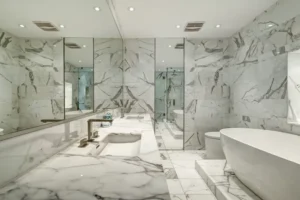
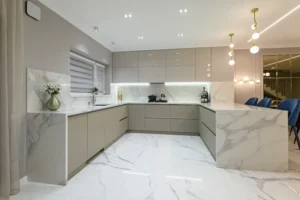
Homeowners who want a marble look without marble’s fragility tend to gravitate here. You get soft whites, warm grays, or striking blues and greens, depending on where the slab was quarried. Each one is genuinely unique, not just a marketing line.
Long-Term Value for Your Home
A properly installed and sealed quartzite countertop can last decades. That kind of lifespan makes it a premium countertop material that pays for itself over time, especially if you plan to stay in your home a while. Buyers touring a home for resale also tend to recognize natural stone as a sign of quality.
If you’re comparing upfront cost against how long a surface lasts, quartzite holds up well against that math. It’s not the cheapest option on day one, but it’s rarely the most expensive to own over ten or twenty years.
What to Consider Before You Choose Quartzite
Quartzite isn’t perfect for every kitchen, and it’s worth knowing the trade-offs before you commit.
Quartzite is a porous surface, meaning it has tiny openings that can absorb liquid if left unsealed. Spills from wine, coffee, or oil can soak in in and cause staining if you don’t wipe them up. Sealing the stone every year, sometimes every six months depending on use, keeps this from becoming a problem.
Etching is another factor. Acidic substances like lemon juice or vinegar can react with certain minerals in quartzite, dulling the surface where they sit. This isn’t unique to quartzite; marble faces the same issue, often worse. Wiping spills quickly avoids most of the risk.
Weight is a practical concern too. Quartzite is dense, so installation often needs extra support, especially for larger islands or waterfall edges. This adds to labor costs and usually means you need an experienced fabricator, not a general contractor.
Cost is the last piece. Quartzite typically runs between $30 and $150 per square foot before installation, depending on rarity and veining. That’s comparable to marble and higher-end granite, and above standard quartz or laminate. (Data opportunity: a regional price comparison table sourced from a stone supplier’s current price list, or a fabricator association survey, would strengthen this section with real numbers instead of estimates.)
Quartzite Countertop Cost Breakdown
Material cost is only part of the total bill. Installation, edge profiles, and support structure all add to the final number, and skipping these details is how homeowners get surprised at checkout.
A standard straight edge keeps costs down, while a bullnose or ogee edge profile can add a noticeable amount per linear foot. Waterfall islands, where the stone wraps down the side panel, use significantly more material and require precise mitered cuts, so expect a real premium there.
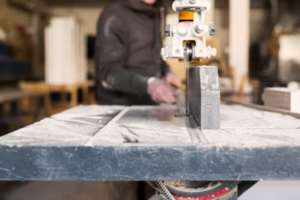
Labor typically runs separate from the slab price and depends on your kitchen’s layout, how many seams are needed, and whether existing cabinets need adjustment. Removal of your old countertop is usually a line item too, not included by default. (Data opportunity: an itemized cost table showing average labor rates per square foot, edge profile upcharges, and waterfall premiums, sourced from a fabricator trade association or a recent remodeling cost survey, would give readers real numbers to budget against instead of ranges.)
Getting a written quote that separates material, labor, edge work, and removal helps you compare fabricators fairly. Two quotes with the same slab price can still differ by thousands once these line items are factored in.
How Do You Care for Quartzite Countertops?
You care for quartzite countertops by sealing them once or twice a year, cleaning spills right away, and using mild soap instead of harsh chemicals. Avoid abrasive scrubbers and acidic cleaners, since both can wear down the sealant faster than normal use. A soft cloth and warm water handle most day-to-day cleaning without any special products.
Set a reminder to reseal the stone every 6 to 12 months, depending on how much the kitchen gets used. A simple water test tells you when it’s due: pour a few drops on the surface, and if it soaks in within a few minutes instead of beading up, it’s time to reseal.
Cutting boards are non-negotiable, even though quartzite resists scratches well. A sharp knife dragged straight across the stone can still dull a blade or mark the sealant. Trivets protect against heat marks over years of use, even though the stone itself tolerates heat fine.
Clean spills from wine, coffee, and citrus as soon as they happen. These are the most common causes of etching and staining on any natural stone countertop, quartzite included. A five-second wipe now saves a sanding and resealing job later.
How Do You Spot Genuine Quartzite?
True quartzite will scratch glass and will resist a steel blade while rock that is often sold as quartzite (but is really dolomitic marble) will be easier to scratch and will react to vinegar. But you can tell which one you’re really buying (before it’s installed) by a simple scratch test and a drop of vinegar on an inconspicuous spot.
This mislabeling occurs more often than most buyers realize. “Some suppliers pass off softer, calcite-rich stones as quartzite because the veining looks similar,” says . A real quartzite slab will not fizz or dull when a small amount of vinegar is left on the slab for a minute. If it does you are probably looking at marble in a different hat.
If the price seems too good to be true for something sold as quartzite, find out where the slab came from and ask your fabricator for proof. A good supplier won’t be shy to answer. One question can save you from a countertop that etches and stains a lot more than you were told to expect.
Quartz vs. Quartzite Countertops in the Kitchen
Quartz and quartzite sound almost identical, but they’re built differently. Quartz is engineered: crushed quartz mixed with resin and pigment, formed into a non-porous slab. Quartzite is fully natural, cut straight from stone with no additives.
That difference shapes how each performs. Quartz doesn’t need sealing and resists stains without any upkeep, since resin fills in what would otherwise be a porous surface. Quartzite needs occasional sealing but handles heat better and offers the kind of natural veining that engineered stone can only imitate.
Price sits close for both, though quartzite trends higher for rare colors and dramatic patterns. If low maintenance is your top priority, quartz is the simpler choice. If you want a natural stone with real character and don’t mind a yearly sealing routine, quartzite wins that comparison.
When Quartz Might Be a Better Fit
There are cases where quartz makes more sense than quartzite, and it’s worth being honest about them. If you want zero sealing, zero etching risk, and a completely uniform pattern for a modern kitchen, engineered quartz delivers that with less effort.
Busy households with young kids, frequent acidic spills, or a preference for a consistent look across a large island often lean toward quartz for exactly these reasons. It’s not a lesser material, just a different set of trade-offs. The honest answer to “why quartzite countertops are the best option for your kitchen” depends partly on how much upkeep you’re willing to do for a one-of-a-kind slab versus a uniform, low-maintenance surface.
Why Quartz Countertops Best?
Quartz countertops have several advantages over quartzite. They offer more appearance options due to the manufacturing process, making them highly customizable. Additionally, they are easier to maintain since they don’t require sealing. Quartz’s superior resistance to cracking, along with proper care, makes it a durable choice for everyday kitchen use.
Considering all these factors, quartz countertops are a better investment, providing an enjoyable kitchen experience and potentially increasing the value of your home. Due to their resilience, low maintenance, and aesthetic versatility, they are a popular choice among homeowners.
Quartzite kitchen countertops offer an unmatched combination of elegance, durability, and easy maintenance. With proper care, your quartzite countertops will continue to shine for years, allowing you to focus on the joy of cooking and sharing meals with loved ones.
If you need assistance choosing the right quartzite for your kitchen remodel, contact us now, visit an SF Marble Granite & Countertops showroom, or contact an authorized SF Marble Granite & Countertops retailer in your area.
Conclusion
In the world of elegance and durability, SF Marble And Granite Inc shines as the ultimate destination for quartzite countertops. Transform your space with the timeless beauty and strength of quartzite, and experience the craftsmanship of SF Marble And Granite Inc. Elevate your home to new heights, where luxury meets longevity, with SF Marble And Granite Inc’s exquisite quartzite countertops. Choose quality, choose SF Marble And Granite Inc, because when it comes to quartzite, we’re the rock-solid choice.
FAQs
Is quartzite more durable than granite?
Yes. Quartzite generally ranks higher on the hardness scale than granite, making it more resistant to scratches and chipping. Granite is still a strong, dependable choice, but quartzite edges it out for households that want maximum durability in a high-traffic kitchen.
Does quartzite need to be sealed?
Yes. Quartzite is a porous surface, so sealing once or twice a year protects it from stains and etching. Skipping this step shortens the countertop’s lifespan and makes spills much harder to clean once they set in.
Can quartzite countertops crack?
Rarely, and usually only from improper installation or extreme impact. The main risk comes from inadequate support during installation, since quartzite is dense and heavy. A qualified fabricator accounts for this with proper bracing underneath the slab.
Is quartzite worth the higher cost compared to granite?
For many homeowners, yes. Quartzite’s added hardness, heat resistance, and unique veining justify the price difference for kitchens that see heavy daily use. If budget is tight and durability needs are moderate, granite still offers strong value at a lower price point.
How long does a quartzite countertop last?
With proper sealing and care, quartzite can last several decades. It’s one of the reasons quartzite countertops are the best option for your kitchen if you’re planning a long-term remodel rather than a short-term update before selling.