Marble stains fast, and that’s not something anyone tells you at the showroom. A glass of wine left overnight, a splash of lemon juice, even a wet coffee mug can leave a mark that no amount of scrubbing removes. We get it. You didn’t spend thousands on a marble countertop just to babysit it.
Here’s the good news. Sealing marble countertops is one of the easiest home maintenance jobs you’ll ever do, and it takes less than an hour. In this article, we’ll walk through exactly how to seal marble countertops, what products actually work, how often you need to redo it, and the mistakes that quietly ruin marble every day. Quick answer for anyone in a hurry: clean the surface, let it dry completely, apply a penetrating marble sealer with a soft cloth, let it sit for the time listed on the product, then wipe off the excess. That’s the whole process.
Why Do Marble Countertops Need Sealing?
The main reason for sealing marble countertops is protection. Marble is a porous stone, which means that liquids and staining agents can seep deep into the pores if not sealed. Over time, this can cause permanent discoloration. Sealing creates a protective barrier that prevents stains from being absorbed. It also helps repel water spots and makes cleaning easier. Some other key benefits of sealing marble countertops include:
- Protects against common household stains like wine, food, soap scum, etc.
- Enhances the natural color and luster of the stone.
- Makes the surface easier to clean by preventing dirt and grime from being absorbed.
- Helps prevent etching from acidic liquids like citrus juices.
- acts as a barrier against bacterial growth.
- Provides UV protection that prevents fading over time from sunlight exposure.
So in short, sealing is crucial for keeping marble countertops looking pristine and preventing damage to the stone. It forms a shield that allows for easier maintenance while showcasing the beauty of the material.
How Often Should You Seal Marble Countertops?
The frequency for resealing marble countertops will depend on the traffic and usage of the areas. As a general guideline, plan to reseal counters anywhere from once every 12-18 months for high traffic areas to every 2-3 years for less-used spaces. Some signs that it’s time for a reseal include:
- Water or other liquids bead up slowly instead of sheeting off quickly.
- Stains are not released as easily during cleaning.
- The surface appears duller or has lost some of its luster.
- Grease or soap scum is harder to remove.
Whenever in doubt about whether to reseal, it’s wise to conduct a spot test. Apply a drop of water – if it absorbs within seconds, then regular resealing should keep your marble protected and looking its best for many years – don’t wait until damage occurs before applying sealer!
Signs Your Marble Countertop Needs Attention First
Before you reach for a sealer, take a close look at the surface itself. Dull spots, rough patches, or faint rings where a glass once sat are usually signs of etching, not just a missing seal.
Etching happens when something acidic touches the stone and reacts with the calcium in the marble, eating into the polish. A sealer won’t fix etching, since the damage sits below the surface layer that sealer protects.
Run your hand across the countertop and feel for texture changes. If a spot feels rougher than the rest, that area likely needs polishing before you move on to sealing, otherwise the sealer will just lock in the existing damage.
How Do You Seal Marble Countertops?
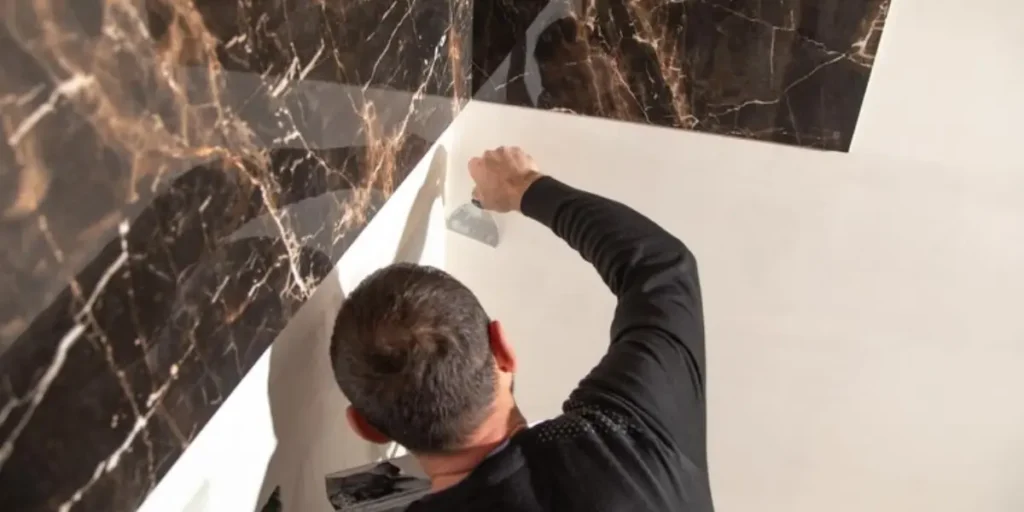
You seal marble countertops by cleaning the surface with a pH-neutral cleaner, letting it dry fully, applying a penetrating sealer in a thin even coat, letting it absorb for the time stated on the label, then buffing off any residue with a dry cloth. Most sealers need a second coat for full protection.
Here’s the process broken down into steps you can actually follow.
Step 1: Clean The Surface Thoroughly
Wipe down the entire countertop with a pH-neutral stone cleaner. Dust, grease, and old cleaning residue block the sealer from soaking into the stone, so this step isn’t optional.
Rinse with clean water and dry with a soft towel. Any leftover moisture will dilute the sealer and weaken the coat.
Step 2: Test A Small Area First
Pick a spot near the edge or under the sink and apply a small amount of sealer. Wait the recommended time, then check for cloudiness or a sticky residue before treating the whole surface.
This step protects you from ruining an entire countertop over a bad batch or the wrong product. It takes five extra minutes and saves hours of correction work later.
Step 3: Apply The Sealer
Pour a small amount onto a clean cloth and spread it across the marble in slow, even strokes. Work in sections rather than trying to cover the whole countertop at once.
Keep the coat thin. A heavy application doesn’t seal better, it just leaves streaks and a hazy film once it dries.
Step 4: Let It Absorb
Leave the sealer on the surface for the time printed on the bottle, usually somewhere between 5 and 20 minutes. Don’t touch or wipe the area during this window.
This is the part people rush, and rushing it is the single biggest reason sealers fail early.
Step 5: Wipe Off The Excess
Buff the surface dry with a clean cloth before the sealer has a chance to dry on top of the stone. Any sealer left sitting on the surface will cure into a cloudy, sticky film that’s a pain to remove.
Check the whole countertop under good light once you’re done. Streaks or dull patches usually mean you missed wiping a section in time.
Step 6: Apply A Second Coat If Needed
Most marble sealers recommend two coats for full protection, especially on kitchen countertops that see daily use. Wait until the first coat is fully dry, then repeat steps 3 through 5.
Check the product label here, since coat requirements vary by brand and by how porous your particular slab is.
Tips For Sealing Marble Countertops
Here are some additional tips for getting top results when sealing marble:
- Work in a well-ventilated area and wear protective gloves during application and buffing.
- For large surfaces, begin sealing from one end and work your way across in sections for easier handling.
- Use overlapping strokes and work sealer well into the grain to maximize absorption.
- Re-wet your applicator as needed if the sealer starts to dry out during application.
- Apply a second thin coat within 30 minutes if the first coat soaks in quickly.
- Avoid excess buildup in low-traffic or exterior corners that don’t require as much protection.
- Consider using a sealer specifically formulated for counters used in food preparation areas.
- Periodically clean sealed stone with a mild soap and water or specialized cleanser.
- Immediately blot spills and don’t let stains set in before cleaning sealed marble surfaces.
Proper sealing technique, along with following the manufacturer’s cure time and reapplication guidelines, will provide the best long-lasting protection for marble countertops.
How To Test If Your Marble Countertop Still Needs Sealing
Drop a small amount of water on the surface and watch what happens over the next 10 to 15 minutes. If the water beads up and sits on top, your seal is still working.
If the water darkens the stone or soaks in within a few minutes, it’s time to reseal. Do this test every few months rather than guessing based on a calendar date, since usage varies from kitchen to kitchen.
Run this test in a few different spots, not just one. Countertops near the sink or stove wear down faster than areas that see less traffic.
How Often Should You Reseal Marble Countertops?
Most marble countertops need resealing once or twice a year, though kitchens with heavy daily use may need it every six months. Bathroom vanities and low-traffic surfaces can often go a full year or longer between applications, depending on the sealer quality and how porous the stone is.
Sealer isn’t permanent, and no brand will tell you otherwise honestly. Daily wiping, cleaning products, and general use slowly wear the coating down.
The water test above is a more reliable guide than a fixed schedule. Some households need to reseal every four months because of heavy cooking, while others go a full year without issue.
Conclusion
In conclusion, sealing is an important part of marble countertop care and maintenance that helps protect this porous natural stone material. By understanding why sealing is needed, the best sealers to use, and following the step-by-step application process, homeowners can easily learn how to seal marble countertops themselves. With regular reapplication every 12-18 months, marble surfaces will stay pristine with only minimal cleaning required. Always start by cleaning thoroughly and allow full curing time for the best sealer adhesion. With proper sealing and care, marble countertops will remain a stunning centerpiece in any kitchen or bathroom for years to come.
You can contact us at:
Email: sfmarbleangranite@gmail.com
Phone: 978-459-5822
SF Marble & Granite
755 Dutton St. Lowell, MA 01854
FAQs
What is the cost to seal marble countertops?
On average, plan to spend between $50-$150 to seal an average sized kitchen or bathroom countertop depending on sealer selected and area size. Reseals every 1-3 years will be less.
What do you need to seal marble countertops and honed stone?
There is no difference in sealing method, but honed stone will absorb more sealer due to its matte texture. Apply a little extra for best results.
How to seal marble naturally?
Minor cracks can be sealed if flushed with epoxy first. For deeper damage, consult a professional on repair options before sealing.
Which is better for marble – penetrating or film forming sealer?
Penetrating sealers are preferred as they don’t alter the natural look or polish of marble like some film-forming products can.
Can I use a natural sealer for cutting boards on marble countertops?
Yes, look for 100% natural food-safe sealers formulated for stone or wood food prep surfaces for both safety and effectiveness on marble kitchen islands or work surfaces.