When you invest in marble flooring, you bring a timeless elegance into your home. To ensure that your floors continue to shine and serve you for years, proper care is essential. In this article, you will learn how to care for marble floor step by step, what routine and deep-cleaning practices to follow, how to handle stains, and how to protect your investment.
Marble floors not only elevate the appearance of your space but also require thoughtful upkeep to maintain their luxury. Regular maintenance and gentle cleaning prevent dullness, stains, and scratches that can develop over time. With the right methods, tools, and attention to detail, your marble surface will retain its natural glow and last for decades without losing its charm.
What is Marble and Why Does It Need Special Care
Marble is a natural stone created when limestone is subjected to immense heat and pressure beneath the earth’s surface. It is elegant, durable in many ways, but also more vulnerable than it appears.
- Marble is porous: meaning it can absorb liquids and stains if left unchecked.
- Marble is acid‐sensitive: substances like vinegar, citrus, tomato sauce or even some cleaners can chemically etch the surface, leaving dull or light marks.
Because of these traits, marble floors need a tailored care routine, not the same as standard ceramic tile or vinyl. Understanding these characteristics helps you choose the right cleaning schedule, materials, and protective measures to keep your marble floor looking its best for years to come.
Beyond its beauty, marble’s sensitivity demands consistent attention. The minerals that give marble its luxurious veins also make it reactive to moisture and acids. Learning how to care for marble floor properly ensures the stone remains spotless and smooth. Without regular maintenance, even light wear and spills can reduce its shine, leading to costly restoration later.
Key Principles for Marble Floor Care
Before diving into specific tasks, keep these guiding principles in mind:
- Always use soft tools (microfiber cloths, soft dust mops) rather than rough brushes or vacuum cleaners with spinning brushes.
- Use pH-neutral cleaners or products specifically designed for natural stone. Avoid any that are acidic or highly alkaline.
- Wipe up spills immediately. Blot, do not rub, to prevent spreading the liquid or pushing it into the stone.
- Use protective measures: mats, rugs, felt pads under furniture, and sealing when needed.
- Schedule and follow both routine maintenance and periodic deep care (for polishing, resealing, and inspection).
Daily, Weekly, and Monthly Care for Your Marble Floor
A consistent cleaning schedule is the foundation of marble care. Daily dusting and weekly mopping keep abrasive dirt and grit from scratching the surface. Small efforts go a long way; when you prevent build-up, you protect the shine. Remember, the goal is to maintain cleanliness gently rather than over-scrubbing, which can do more harm than good.
Daily / As Needed
- Sweep or dust-mop the floor to remove grit, dirt and debris. Even small particles can scratch marble if dragged across the surface.
- Immediately blot any spills, especially acidic ones like citrus juice, tomato sauce, wine or coffee. Use a soft cloth, then rinse with clear water and dry.
- Keep entry mats and area rugs in high-use zones (e.g., entrances, hallways) to catch dirt from shoes.
Weekly
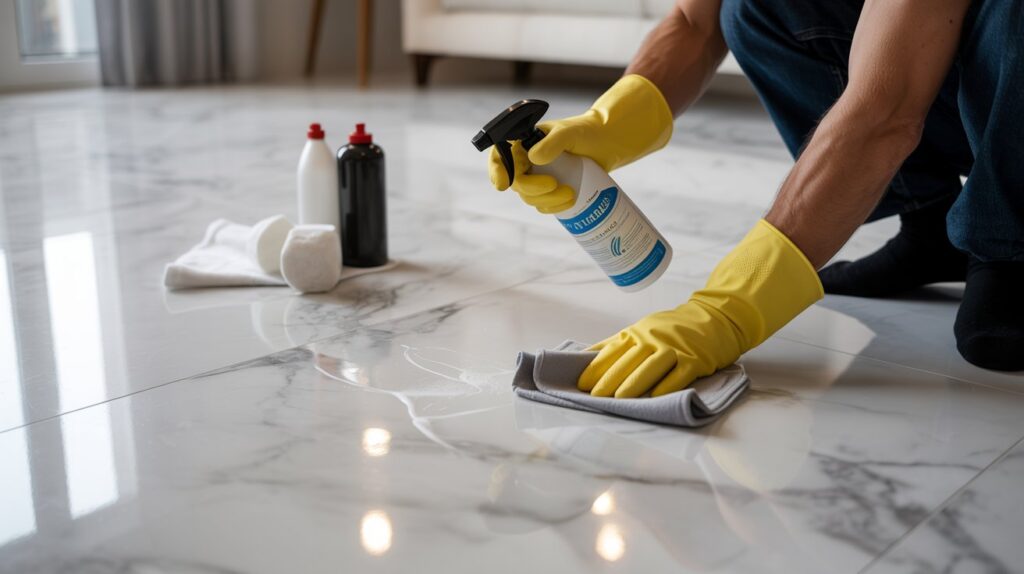
- Use a soft microfiber mop with a mild, pH-neutral cleaner specially for marble, diluted per manufacturer instructions. After mopping, rinse the floor if needed and dry with a microfiber cloth to avoid water spots or streaks.
- Inspect for minor marks or dull patches and treat them gently.
Monthly
Beyond its beauty, marble’s sensitivity demands consistent attention. The minerals that give marble its luxurious veins also make it reactive to moisture and acids. Learning how to care for marble floor properly ensures the stone remains spotless and smooth. Beyond daily cleaning, periodic maintenance ensures your marble stays sealed, polished, and protected. This includes checking the sealant, performing the water-drop test, and arranging for professional polishing if dullness appears. By staying proactive, you not only preserve the floor’s shine but also reduce long-term costs associated with deep restoration or repairs.
- In high-traffic areas, double check that protective mats and felt pads are in place and still in good condition.
- If sealing is required in your location/use (see below), perform a simple water test: pour a small amount of water on a spot and see if it beads or spreads/darkens. If it darkens, resealing may be due.
Every 6 to 12 months (or as required)
- Apply or reapply a penetrating stone sealer made for marble if the manufacturer or installer recommended one. Sealing helps slow absorption of liquids and stains but does not make marble completely stain-proof.
- For floors that have lost luster, you may consider professional polishing to restore shine, but avoid over-polishing, which can make the floor slippery or lead to wear.
Dealing with Common Issues: Stains, Etches, Scratches
Even with great care, marble can face issues like stains, etching, or scratches over time. Recognizing the problem early is key to proper treatment. Each issue requires a different approach, from gentle blotting for oil stains to professional polishing for etches. With the right repair method, most damage can be minimized or even reversed, keeping your marble floor flawless and bright.
Stains vs. Etches
- A stain means something has been absorbed into the marble’s pores and appears darker (or sometimes cloudy).
- An etch is a chemical reaction, acid has reacted with the marble surface and left a dull spot or light mark rather than a dark stain.
Oil, grease, lipstick, and cooking oil can leave dark spots.
Treatment: Blot up fresh spills, apply mild dish soap solution, then, if needed, use cornstarch or baking soda paste to absorb deeper oil. Rinse and dry thoroughly.
Organic stains (wine, coffee, juice)
Blot immediately. Use a mild ammonia diluted or hydrogen peroxide solution if safe for your stone (test first). Let it sit, then rinse. Avoid aggressive scrubbing.
Etching (acid damage)
These look like dull marks. They often require professional restoration, buffing or refinishing. Prevention is key: avoid acidic cleaners, table mats for acidic foods, and immediate cleanup. Scratches and chips
Marble is softer than many people think, and furniture legs, shoe grit, and slider pads can scratch or chip it. Use felt pads under furniture, avoid dragging heavy items, and use rugs in high traffic zones. For chips, a specialist may fill or repair.
Mistakes to Avoid While Care of Marble Floors
- Using vinegar, lemon juice, bleach, or cleaners not designated as stone-safe. These can strip sealers and etch the surface.
- Employing abrasive brushes, scrubbing pads, or vacuum brushes with hard wheels. These lead to micro-scratches and dulling.
- Ignoring spills or failing to blot quickly, specially in a high-use area like the kitchen or entrance.
- Failing to seal when needed or lettingthe seal layer degrade. This leaves marble vulnerable to staining.
Protecting Your Marble Floor from Wear & Traffic
Your marble floor’s biggest enemy is foot traffic and heavy furniture movement. Over time, constant friction wears away the polish and exposes the surface to scratches. Strategic use of rugs, mats, and felt pads prevents this damage. Combined with mindful cleaning habits, these small precautions help preserve the luxurious shine of marble for years.
- Place entrance mats that catch grit near doors.
- Use area rugs or runners in high traffic zones (hallways, living room paths).
- Place felt pads on furniture legs to avoid damage when moving.
- Remove or replace chair pads, stool sliders if worn.
- Use soft-soled indoor shoes or slippers to reduce grit.
- Avoid direct dragging of heavy items across the floor.
Why Marble Floor Maintenance Matters
marble floor tiles maintenance extends the life of your floor, preserves the aesthetic and value, and prevents costly restoration later. Neglected marble can become etched, stained beyond DIY repair, scratched, or need professional refinishing, which is far more expensive than regular upkeep.
How to Care for Marble Floor: Step-by-Step Checklist
Here is a simple checklist you can print or keep handy:
- Daily
- Dry dust or sweep floor.
- Blot any spills immediately.
- Wipe entry mats and ensure they are free of grit.
- Dry dust or sweep floor.
- Weekly
- Mop with soft microfiber and pH-neutral cleaner.
- Rinse mop head, change water when dirty.
- Dry the floor thoroughly after cleaning.
- Mop with soft microfiber and pH-neutral cleaner.
- Monthly
- Check for darkening under water to test sealing.
- Inspect protective rugs and furniture pads.
- Gently check for minor marks or scratches to address early.
- Check for darkening under water to test sealing.
- Every 6–12 months
- Reseal the floor if needed.
- Consider professional polishing if the finish appears dull.
- Review high-traffic zones and adjust mats/rugs as needed.
- Reseal the floor if needed.
Conclusion
Marble floor clean does not need to be complex; it simply requires the right tools, the right cleaners, and consistency. By following a routine of daily dusting, prompt spill attention, weekly gentle cleaning, and periodic sealing or inspection, you protect your marble’s beauty and ensure its lifespan. Remember: marble looks best when treated as the high-quality natural stone it is.
After the conclusion: If you are looking for professional help with stone surfaces, consider our team at SF Marble & Granite. We provide marble floor installation and granite countertop installation services, and our expertise covers both the initial installation and advice on ongoing care. Whether you need a new installation or expert maintenance, we can help you make the most of your investment in marble or granite.
Frequently Asked Questions
How often should I reseal my marble floor?
Most floors need resealing every 6 to 12 months, depending on foot traffic, location, and finish. Do a water test to check.
Can I use a steam mop on a marble floor?
It is not recommended. Steam can penetrate porous natural stone like marble and cause damage over time.
My marble floor has small scratches. Can I fix them myself?
Minor surface scratches may be buffed with a soft cloth and stone-safe polish, but deeper scratches or chips typically require a professional.
Can I use a regular floor cleaner for marble?
No. Only pH-neutral or stone-specific cleaners are safe. Acidic or highly alkaline cleaners can etch or damage marble.
Why did my marble floor become dull even after cleaning?
Possible reasons include using the wrong cleaner, failing to dry the floor, using abrasive tools, or the sealant having worn off. A professional polish or reseal may be needed.