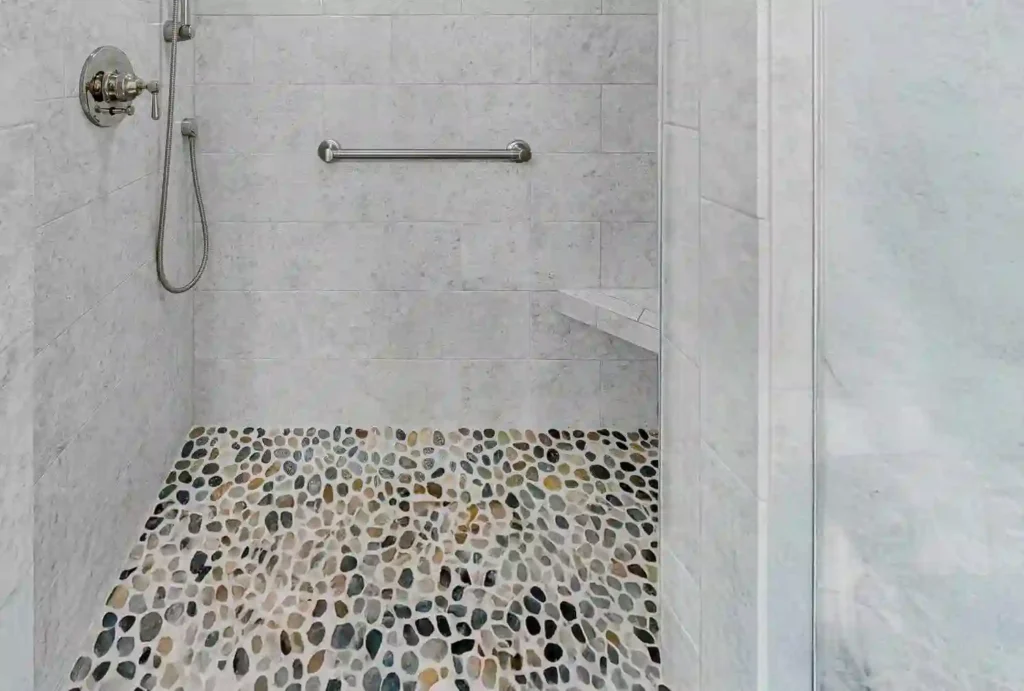
Pebble shower floors look beautiful. But those small stones and deep grout lines trap soap scum, mold, and hard water stains faster than flat tile. Most people clean their shower and completely ignore the floor, and then wonder why it turns black or slippery. You are not alone in this.
Learning how to clean pebble shower floor correctly saves you money and keeps it looking new. This guide covers everything, from daily habits to deep cleaning and resealing.
Why Pebble Shower Floors Get Dirty Quickly
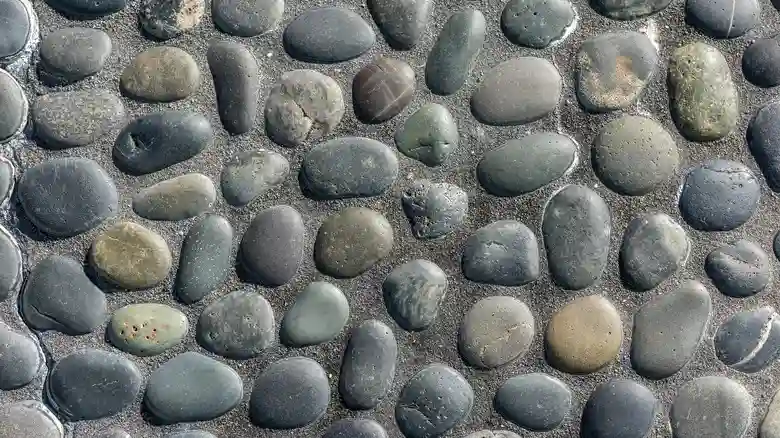
Pebble floors have more surface area than regular tile. Every stone has edges, curves, and gaps around it. Water sits in those gaps. Soap and shampoo residue settle there. Body oils stick to the stone surface.
Hard water leaves calcium deposits on top of each pebble. Over time, mold and mildew grow in the grout between stones. This is why a pebble stone shower floor can look dirty even after a basic rinse.
The texture that makes pebble floors so attractive is the same reason they need more care.
Why Pebble Shower Floors Need More Cleaning
A standard tile floor has maybe 10 to 12 grout lines per square foot. A pebble shower floor has dozens. Each grout line is a spot where mold can grow. Each stone edge traps minerals.
When you skip regular cleaning on a stone pebble shower floor, the buildup hardens. It bonds to the grout. It stains the stone surface. At that point, simple scrubbing will not fix it. You need a proper deep clean and sometimes professional help.
That is why consistent cleaning matters more here than with any other bathroom floor.
What Not to Use on Pebble Shower Floors
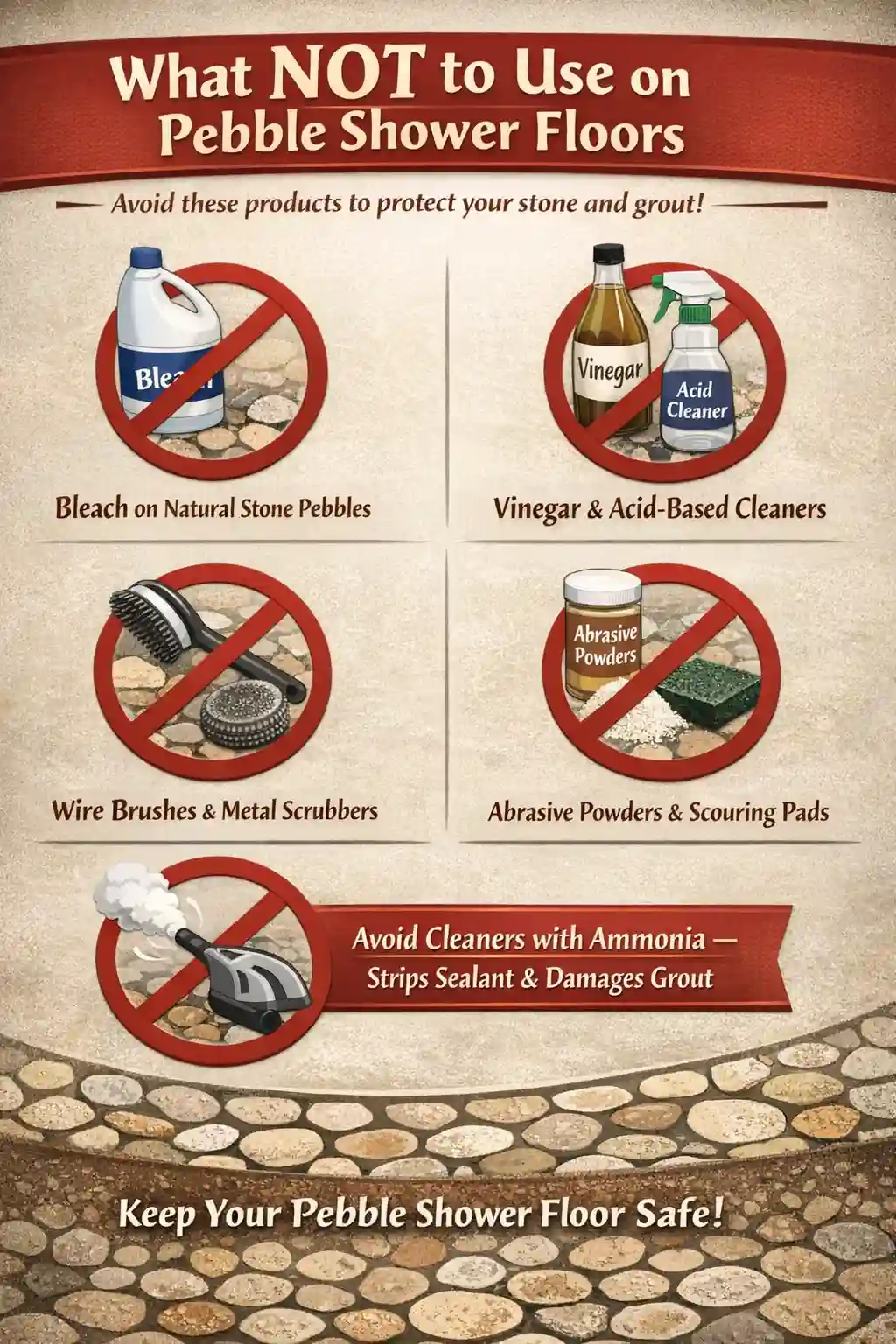
This section is important. Using the wrong product can damage your floor permanently.
Never use:
- Bleach directly on natural stone pebbles
- Vinegar or any acid-based cleaner on stone (it etches the surface)
- Wire brushes or metal scrubbers
- Abrasive powders or scouring pads
- Steam cleaners at very high pressure directly on grout
Many people reach for vinegar because it cuts soap scum. On ceramic tile, that is fine. On natural stone, it destroys the finish and weakens the grout over time. Avoid it completely on a pebble stone shower floor.
Also skip any cleaner with ammonia. It strips sealant and dries out the grout.
Tools and Materials You Will Need
Before you start pebble shower floor cleaning, gather everything first. You will not want to stop mid-process.
You will need:
- pH-neutral stone cleaner or mild dish soap
- A stiff nylon brush (not metal)
- An old toothbrush for grout lines
- White microfiber cloths
- Warm water
- A spray bottle
- Stone-safe grout cleaner (for deep cleaning)
- Stone sealer (for resealing, done separately)
You can find pH-neutral cleaners at most home improvement stores. Brands like Black Diamond, StoneTech, and Miracle Sealants make good options for natural stone surfaces.
Step-by-Step: How to Clean Pebble Shower Floor
Here is how to clean pebble shower floor from start to finish.
Step 1: Rinse the Floor First
Turn the shower on warm water for 60 seconds. This loosens surface dirt and softens any soap scum. It also wets the grout, which makes scrubbing more effective.
Step 2: Apply Your Cleaner
Spray your pH-neutral cleaner across the entire floor. Make sure it gets between the pebbles and sits in the grout lines. Let it sit for 3 to 5 minutes. Do not let it dry on the surface.
For regular maintenance cleaning, mild dish soap mixed with warm water works well. Use about one teaspoon of soap per cup of water in a spray bottle.
Step 3: Scrub the Stone Surfaces
Use your stiff nylon brush and scrub in small circular motions. Work in sections so you do not miss spots. The nylon bristles can get between the pebbles without scratching them.
Scrub each stone and the space around it. You will see foam build up. That is the cleaner lifting the grime.
Step 4: Get Into the Grout Lines
Switch to your old toothbrush. Run it along every grout line you can see. This is the most important step for how to clean pebble rock shower floor properly. The grout holds mold and stains more than the stones themselves.
Take your time here. It is slow work but it makes a real difference.
Step 5: Rinse Thoroughly
Rinse the floor with warm water. Make sure no soap or cleaner residue is left behind. Leftover cleaner attracts more dirt and can cloud the stone surface over time.
Rinse twice if needed.
Step 6: Dry the Floor
Use a microfiber cloth or squeegee to remove standing water. Leaving water on natural stone promotes mold growth. If you have a bathroom fan, run it for 15 to 20 minutes after cleaning.
You can read about: How to Clean Swimming Pool Tiles
How to Remove Soap Scum From Pebble Shower Floors
Soap scum is a white or grey film that builds up over weeks. It is a mix of soap and hard water minerals.
To remove it, use a stone-safe soap scum remover. Spray it on, let it sit for 5 minutes, then scrub with your nylon brush. For stubborn spots, repeat the process. Do not try to scrape it off with anything sharp.
If soap scum is very thick, a baking soda paste can help. Mix baking soda with a small amount of water into a thick paste. Apply it to the stone, let it sit for 10 minutes, then scrub and rinse. Baking soda is mildly abrasive but safe for most natural stone.
How to Remove Mold and Mildew From Pebble Shower Floors
Mold shows up as black or dark green spots in the grout. It is common in pebble shower floors because of the texture and moisture that gets trapped.
For mold, use a hydrogen peroxide-based cleaner. Spray it directly on the moldy grout. Let it sit for 10 to 15 minutes. Scrub with your toothbrush. Rinse well.
Do not use bleach on colored grout or natural stone. It can discolor both permanently.
If mold keeps coming back, your floor likely needs resealing. A proper sealant blocks moisture from soaking into the grout and stops mold from taking hold.
Deep Cleaning a Pebble Shower Floor
Regular cleaning keeps things tidy. But every 3 to 4 months, do a proper deep clean on your pebble stone shower floor.
Deep cleaning steps:
- Clear everything from the shower first.
- Apply a stone-safe grout cleaner to the entire floor.
- Let it soak for 10 to 15 minutes.
- Use a stiff nylon brush and scrub every inch.
- Use your toothbrush on every grout line.
- Rinse multiple times until the water runs completely clear.
- Dry the surface fully.
- Check if resealing is needed after the floor dries (usually 24 hours later).
Deep cleaning removes the mineral buildup and biological growth that regular cleaning misses.
How to Keep a Pebble Shower Floor Looking New
Prevention is easier than deep cleaning. These habits keep your floor in good shape between cleanings.
Daily habits:
- Rinse the floor with water after every shower
- Squeegee or wipe the floor dry after each use
- Leave the shower door or curtain open to let air circulate
Weekly habits:
- Quick scrub with mild soapy water
- Check grout lines for early mold signs
Monthly habits:
- Full cleaning with pH-neutral stone cleaner
- Check the sealant by dripping water on the stone. If it soaks in instead of beading, it is time to reseal.
A good routine is the best long-term strategy for pebble shower floor cleaning.
How Often Should You Clean Pebble Shower Floors?
Here is a simple schedule to follow:
| Frequency | Task |
| After every shower | Rinse and dry |
| Once a week | Light scrub with mild soap |
| Once a month | Full clean with stone cleaner |
| Every 3 to 4 months | Deep clean |
| Once a year | Reseal (or as needed) |
Homes with hard water may need more frequent cleaning because mineral deposits build up faster.
When to Reseal a Pebble Shower Floor
Sealant protects both the stone and the grout. Without it, water soaks in and causes staining, mold, and damage.
Signs your floor needs resealing:
- Water no longer beads on the stone surface
- Grout looks dark or stained even after cleaning
- Mold keeps returning despite regular cleaning
- The stone looks dull or cloudy
To test it, pour a few drops of water on the driest part of the floor. If it soaks in within 2 to 3 minutes, reseal soon. If it beads up and sits on top, your sealant is still working.
Use a penetrating stone sealer. Apply it with a small brush or foam applicator. Let it soak in, then wipe off the excess before it dries. Always seal in a well-ventilated area.
Most pebble shower floors need resealing once a year. High-traffic showers may need it every 6 months.
Common Mistakes People Make With Pebble Shower Floors
Even people who clean regularly make these mistakes.
Using the wrong cleaner: The biggest mistake. Acidic cleaners like vinegar damage natural stone. Always check the label before using anything.
Skipping the grout lines: Scrubbing only the stone tops and ignoring the grout lines leads to mold buildup. The grout needs attention every time.
Not drying the floor: Wet surfaces grow mold faster. Drying after each shower makes a big difference.
Waiting too long between deep cleans: Buildup that sits for months is very hard to remove. Consistent cleaning prevents that.
Forgetting to reseal: This is the one most people skip. Without sealant, even the best cleaning routine cannot stop staining.
Conclusion
A pebble shower floor adds real beauty to any bathroom. But it needs more care than standard tile. With the right tools, the right cleaner, and a consistent routine, it stays clean and looks great for years.
If your floor has heavy staining, deep mold, or damaged grout, a professional restoration may be the smartest move. At SF Marble & Granite, we specialize in natural stone care, restoration, and sealing. Our team handles everything from routine maintenance to full floor repairs.
Learning how to clean pebble shower floor correctly is the first step. Sticking to the routine is what keeps it looking the way it did on day one.
FAQs
Q: Can I use vinegar to clean a pebble shower floor?
No. Vinegar is acidic and damages natural stone over time. It etches the surface and breaks down grout. Use a pH-neutral stone cleaner instead.
Q: How do I get black mold out of pebble shower grout?
Use a hydrogen peroxide-based cleaner. Apply it, let it sit for 10 to 15 minutes, scrub with a toothbrush, and rinse well. If mold keeps returning, your floor needs resealing.
Q: How often should I deep clean my pebble shower floor?
Every 3 to 4 months is a good rule. If you have hard water or use the shower heavily, do it every 6 to 8 weeks.
Q: What is the best cleaner for a pebble stone shower floor?
A pH-neutral stone cleaner is the safest choice. Brands like StoneTech, Black Diamond, and Miracle Sealants are trusted options for natural stone.
Q: How do I know if my pebble shower floor needs resealing?
Drip a few drops of water on the stone. If the water soaks in within 2 to 3 minutes, it is time to reseal. If it beads up, the sealant is still good.
Q: Is it okay to use a steam cleaner on pebble shower floors?
High-pressure steam can damage grout and loosen stones over time. If you use one, keep it on a low setting and do not hold it in one spot.
Q: Can I clean a pebble shower floor with baking soda?
Yes, for light scrubbing and soap scum removal. Make a paste with water, apply it, let it sit, then scrub and rinse. It is a safe option for most natural stone.