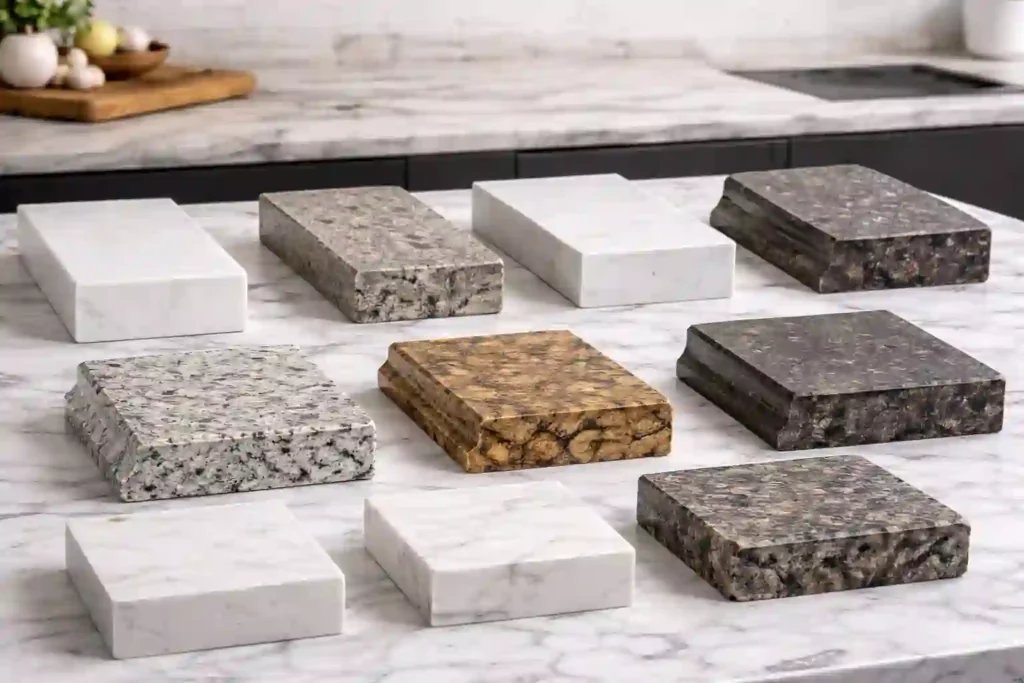
Choosing a countertop is not just about color or stone type. One detail that often gets overlooked but makes a real difference in daily use is the edge profile. The right edge can improve safety, make cleaning easier, and change how your kitchen feels the moment you walk in. That’s why understanding the Types of Countertop Edges is important before you finalize your kitchen or bathroom project.
At SF Marble & Granite Inc, we work with homeowners every day who are surprised by how much an edge profile affects both function and style. Based on real fabrication and installation experience, this guide explains popular edge options in simple terms, so you can make a confident, informed choice.
What Are Countertop Edge Profiles?
Countertop edge profiles are the finished shapes along the exposed edges of your countertop. This is the part you see and touch the most. While it may look like a small detail, the edge affects how the stone handles impact, how safe it is around corners, and how easy it is to maintain over time.
Edge selection is not only a design choice. It is also a performance decision. Some edges are stronger for heavy stone slabs, some hide wear better, and others require more skilled fabrication. From our experience working with homeowners at SF Marble & Granite Inc, edge profiles are one of the most important decisions made during fabrication.
Why Countertop Edge Profiles Matter in Kitchen Design
Safety for Families
Sharp corners can be risky, especially in busy kitchens. Rounded profiles reduce the chance of injuries and are often preferred in homes with kids or seniors.
Daily Use Durability
Some edges resist chipping better than others. The wrong edge on a soft stone can lead to damage over time.
Visual Impact
Edges help define the overall look. A simple edge feels modern, while a detailed edge adds a classic or luxury touch.
Understanding the types of edging for countertops helps balance looks with real-world use.
Most Popular Types of Countertop Edges
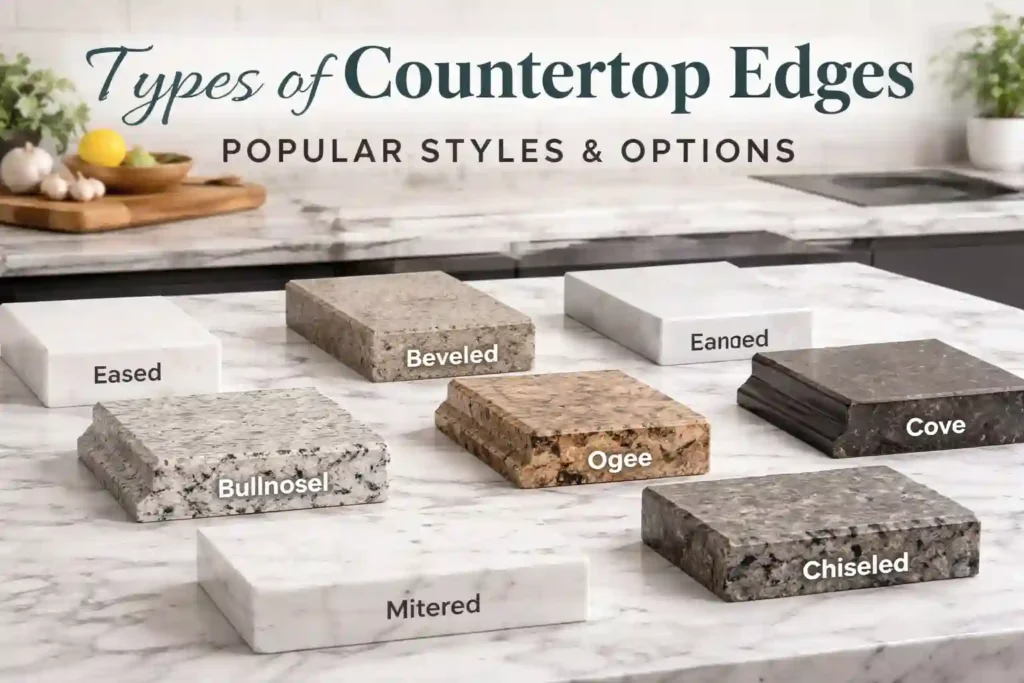
Below are the most requested Types of Countertop Edges, based on real customer preferences and long-term performance.
Eased Edge (Straight Edge Countertop)
The eased edge is clean, simple, and slightly softened at the corners.
Why homeowners choose it:
- Works well in modern and transitional kitchens
- Easy to clean
- Budget-friendly and durable
It’s one of the most common types of edging for countertops because it suits almost any material.
Beveled Edge Countertop
This edge has an angled cut, creating a sharp, decorative line.
Best for:
- Adding detail without heavy curves
- Highlighting stone patterns
It’s one of the preferred types of edges on granite countertops, as granite handles the angled cut well.
Half Bullnose Edge Countertop
Rounded on top with a flat bottom, this edge offers comfort without looking bulky.
Good choice for:
- Family kitchens
- Medium-traffic areas
The bullnose countertop edge style is popular because it blends safety with a clean look.
Full Bullnose Edge Countertop
Fully rounded from top to bottom, this edge feels smooth and classic.
Why it works well:
- Safer for soft stones
- Easy to wipe clean
It’s often recommended for marble, where softer edges reduce chipping.
Ogee Edge Countertop
This decorative, S-shaped edge is known for its elegant look.
Important to know:
- Requires thick slabs
- Needs expert fabrication
Ogee edges are chosen for luxury kitchens and formal spaces.
Dupont Edge Countertop
A stylish drop-down design with a small curve at the top.
Best for:
- Custom kitchens
- Homeowners who want a refined edge without going too bold
This edge highlights craftsmanship more than most standard options.
Mitered Edge Countertop
This creates the appearance of a thick slab by joining stone at an angle.
Popular for:
- High-end kitchens
- Large islands
It’s commonly used with granite and quartz for a premium look.
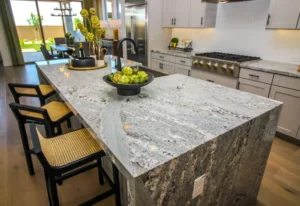
Waterfall Edge Countertop
The stone continues vertically down the sides of cabinets or islands.
Why it’s trending:
- Strong visual impact
- Works well in modern homes
This is a design-driven choice rather than a practical edge for every kitchen.
Cove Edge Countertop
A curved edge that slopes inward, making it easy to clean.
Ideal for:
- Traditional kitchens
- Homeowners who value low maintenance
It’s one of the most functional types of edging for countertops.
Chiseled Edge Countertop (Natural / Raw Edge)
This edge keeps a rough, natural finish.
Best suited for:
- Rustic designs
- Outdoor kitchens
It highlights the natural character of stone rather than polish.
Best Countertop Edge Styles by Material
Choosing an edge also depends on the stone itself.
Granite Countertop Edges
Granite is strong and durable, making it suitable for many profiles.
Recommended options:
- Beveled
- Eased
- Bullnose
These are the most reliable types of edges on granite countertops for long-term use.
Marble & Soapstone Edges
These stones are softer and benefit from gentle profiles.
Best choices:
- Full bullnose
- Half bullnose
Rounded edges reduce chipping and improve safety.
Quartz Countertop Edges
Quartz is consistent and engineered, allowing precise shaping.
Most popular options:
- Eased
- Beveled
- Mitered
Many homeowners ask about the types of edges for quartz countertops because quartz supports clean, modern profiles. Among quartz countertop edges most popular are eased and beveled designs due to durability and cost balance. When reviewing quartz countertop edge options, consistency and maintenance are key factors.
Factors That Impact Edge Style Selection
Safety and Comfort
Rounded edges are safer for daily use, especially in busy kitchens.
Ease of Cleaning and Maintenance
Simple edges collect less dirt and are easier to wipe down.
Design Cohesion with Cabinets & Backsplash
Edges should match cabinet style and backsplash thickness for a balanced look.
Cost and Fabrication Complexity
Detailed edges cost more due to labor and material thickness. This is where professional Granite Fabrication Services in Lowell, MA play an important role in achieving clean, long-lasting results.
You may also read: Laminate Countertops vs Granite: Which One Is Better for Your Kitchen?
How to Choose the Best Edge for Your Countertops
Start by thinking about how you use your kitchen. A high-traffic family kitchen needs durability and safety. A show kitchen can focus more on design.
Consider:
- Your lifestyle
- Budget limits
- Stone type
- Daily kitchen usage
Professional fabrication and installation ensure the edge performs as expected for years, not just on day one.
Final Thoughts
The right edge profile improves safety, durability, and the overall look of your kitchen. Understanding the Types of Countertop Edges helps you avoid costly mistakes and choose a style that truly fits your space. If you want expert guidance, custom fabrication, and long-term value, contact us today. At SF Marble & Granite Inc, we help homeowners choose edges that look good, perform well, and last for years.
Frequently Asked Questions
Which edge is best for granite countertops?
Eased and beveled edges are among the best types of edges on granite countertops because they balance durability, cost, and style.
Are rounded edges safer for kitchens?
Yes. Rounded profiles like the bullnose countertop edge reduce sharp corners and are safer for families.
Which countertop edge profile costs more?
Ogee, Dupont, and mitered edges cost more due to extra fabrication time and stone thickness.
What are the most popular quartz countertop edges?
Among quartz countertop edges most popular, eased and beveled profiles stand out for their clean look and easy maintenance.
Can chipped countertop edges be repaired?
Minor chips can often be repaired, but proper fabrication and edge choice reduce the risk from the start.